
The modern business landscape demands speed, adaptability, and efficiency. Yet many organizations still rely on fragmented, outdated processes that slow growth, increase error rates, and frustrate employees and customers alike.
That’s where business process management software plays a critical role.
In 2025, BPM tools are not just about automation—they’re about creating a connected, intelligent ecosystem that empowers business users to:
- Design and manage processes with little to no code
- Collaborate across departments and geographies
- Analyze operations in real-time
- Make data-driven decisions that improve performance
Whether you’re a startup digitizing for the first time or an enterprise optimizing legacy systems, this guide introduces you to the 10 most effective BPM tools in 2025, based on usability, scalability, automation capabilities, and innovation.
Content
What Is Business Process Management Software?
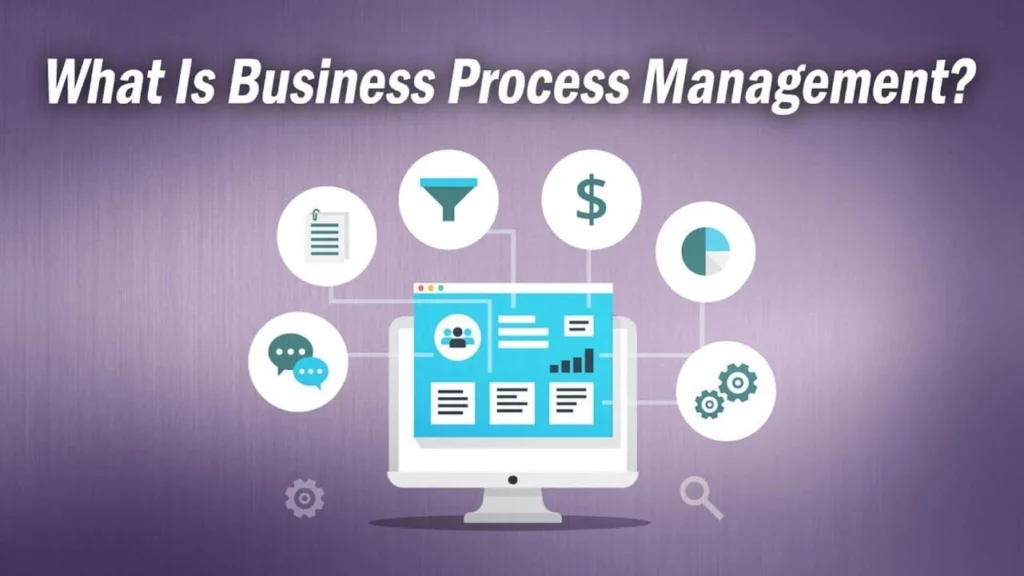
Business Process Management (BPM) is a systematic approach to creating, analyzing, improving, and automating business processes to enhance operational efficiency and deliver value.
BPM helps organizations answer questions like:
- How can we reduce delays in approvals?
- Where are we wasting time or resources?
- How can we ensure compliance with every step?
It aligns people, systems, and data by streamlining how tasks are executed, measured, and improved.
BPM Lifecycle: From Design to Optimization
Every BPM strategy follows a lifecycle. The best software solutions support every stage:
| Stage | Description | Supported by BPM Software |
| 1. Process Design | Define workflows, responsibilities, and triggers | Visual designers, form builders |
| 2. Modeling | Simulate the process to identify gaps or inefficiencies | Flow simulators, sandbox environments |
| 3. Execution | Run the process and assign tasks | Workflow automation, notifications |
| 4. Monitoring | Track task progress and process KPIs | Dashboards, real-time alerts |
| 5. Optimization | Refine and improve based on data | AI recommendations, performance reports |
Modern BPM tools turn this complex cycle into a simple, user-friendly experience accessible to business users without IT support.
Use Cases: Where BPM Delivers the Most Value
BPM software can be applied across departments and industries:
- Human Resources (HR)
- Employee onboarding and offboarding
- Leave and expense approvals
- Finance & Accounting
- Invoice processing
- Budget requests and approvals
- Customer Support
- Ticket escalation workflows
- SLA compliance tracking
- Sales & Marketing
- Lead qualification workflows
- Campaign approvals
- Healthcare
- Patient intake processes
- Claims and compliance workflows
BPM software creates standardized, auditable, and error-free processes—critical in regulated industries like finance, healthcare, and manufacturing.
Business Process Management Software Trends to Watch
1. AI-Driven Process Intelligence
BPM tools now use AI to analyze bottlenecks, predict failures, and recommend improvements before they occur.
2. Low-Code/No-Code Empowerment
Non-technical users can design, launch, and modify workflows with intuitive interfaces—speeding up digital transformation.
3. Process Mining Integration
Advanced platforms incorporate process mining to uncover hidden inefficiencies and model improvements based on actual usage data.
4. Cloud-Native Architectures
More BPM platforms are hosted on secure, scalable cloud environments—reducing IT overhead and enabling global access.
5. Hyperautomation
BPM tools are now part of larger hyperautomation strategies, integrating with RPA, chatbots, and ML models to automate entire process ecosystems.
ROI: What You Gain From BPM Investment
When implemented correctly, business process management software offers measurable ROI:
| Benefit | Impact |
| Process speed | 2x–5x faster cycle times |
| Cost savings | 20%–30% reduction in labor costs |
| Accuracy | 40%+ reduction in manual errors |
| Compliance | Full process auditability |
| Employee productivity | More time for value-driven tasks |
Organizations that embed BPM into their core operations often see faster decision-making, improved employee morale, and better customer experience.
Internal Resources & Further Reading
Explore more on business process improvement, workflow automation, and digital transformation:
- Why Workflow Automation Matters in 2025
- Case Study: How a Global Manufacturer Cut Costs with BPM
- Checklist: Is Your Organization Ready for BPM?
- Beginner’s Guide to Low-Code BPM Tools
Final Thoughts on Business Process Management Software
As digital disruption reshapes every industry, business process management software is becoming a strategic differentiator rather than a back-office tool.
The BPM platforms reviewed above are leading the way in 2025 by offering:
- Low-code agility
- Scalable automation
- Real-time visibility
- AI-driven optimization
No matter the size or sector of your business, investing in the right BPM solution can unlock significant gains in speed, cost savings, and productivity.
The sooner you start improving your processes, the faster you’ll see results. Choose a tool that supports your vision—and transform how your business works, one workflow at a time.
FAQs
What industries benefit most from BPM software?
Healthcare, manufacturing, finance, logistics, and government sectors benefit significantly due to the need for standardization, compliance, and efficiency.
Can BPM software integrate with ERP or CRM systems?
Yes. Most modern BPM platforms offer native or API-based integration with systems like Salesforce, SAP, Oracle, and Microsoft Dynamics.

Richard Wright is a blogger with a passion for technology who has been writing about the latest in the world of gadgets and gizmos. They are an avid reader of Science-Fiction novels and love to spend time with their wife and kids.